Friday, 19 January 2018

The Anarchic Possibilities of Paula Vogel's Desdemona

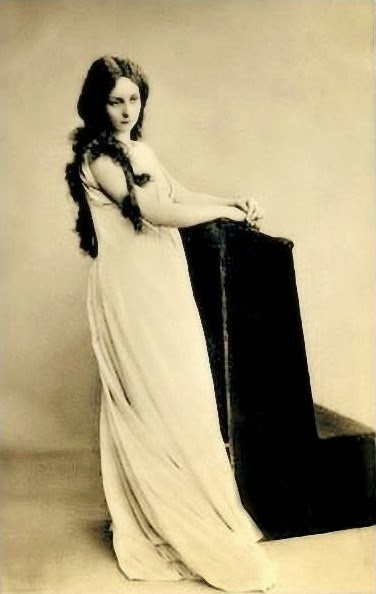
Вера Фёдоровна Комиссаржевская в роли Дездемоны
(Vera Komissarzhevskaya as Desdemona), before 1910


In Horrible Prettiness: Burlesque and American Culture, Robert Allen  suggests that in the cultural realm it can be more useful to think of power relations in terms of 'subordination' and 'ordination', since 'cultural power is rarely exercised with the force and directness suggested by the term domination'. Rather, power is expressed through ordination:  the arrangement of things in ranks and orders - what is high, what is low; what is us, what is them. Insubordination, then, involves temporarily upsetting these hierarchies and distinctions.
In his exploration of how burlesque is involved in this struggle between ordination and insubordination, Allen turns to Michael Bakhtin and his idea of the transgressive possibilities of the carnivalesque in life and literature, particularly Rabelais' anarchic and grotesque texts. Bakhtin explored how carnival allowed hierarchies to be disrupted and even turned on their head, so that a servant can be master for a day, and even sacred rituals can be lampooned. However, as Allen points out, the Marxist critic Terry Eagleton and others have questioned whether this does any permanent damage to the dominant ideology or just acts as a form of pressure valve, so can even be seen as part of the operation of power of the dominant group.
It is interesting to read the contemporary New York dramatist Paula Vogel's use of burlesque in this context. For example, in her Desdemona: a Play about a Handkechief - a rewriting of Shakespeare's Othello - what is happening between the audience and the performers when Bianca and Desdemona cheerfully whip each other? Are they turning themselves into sexual objects to be consumed by the audience or is something more subtle happening? Is the audience perhaps being forced to confront themselves with the question of why this scene is pleasurable to them and what role they have as spectator? How does Vogel disrupt the original dichotomy of virgin and whore in Shakespeare's Othello to explore heterosexual desire and the brutal institutions by which - in this play - it is contained and exploited.  Given that Vogel refuses to allow her play to settle comfortably either into the territory of unadulterated comedy or tragedy, how is its playfulness and slipperiness used to upset the symbolic order that attempts to fix us in our identities? Does, in fact, playfulness have more revolutionary potential than the strict control of meaning found in many more sombre political plays?

References

Robert Allen, Horrible Prettiness: Burlesque and American Culture (University of North Carolina Press, 1991).
Copyright Catherine Rosario

Paula Vogel, Desdemona: A Tale About a Handkerchief  (Dramatists Play Service, 1994).

Bound by Jesse Briton

The haunting sea shanties sung by the men appear to force them to see their conflicted lives in romantic terms, and so act with insane recklessness.


Härkeberga kyrka Church, Diocese of Uppsala, Enköping, Sweden. Medieval painting of Jonah and the Whale by Albertus Pictor (image photogaphed by Håkan Svensson)

Southwark Playhouse’s cavernous, faintly slimy Vault under London Bridge is a perfect venue for Jesse Briton’s tense play, Bound. Beneath the rumble of the trains, we fall into a watery world where six trawlermen are sailing out to sea to bring in a precious haul of fish to save their skins. The illusion of being inside a storm-tossed ship is brilliantly created by darkness and a dizzyingly swinging light, the sound of wildly flapping tarpaulin, and the men’s desperate clinging to each other and to the sliding table and chairs that make up the only set. The ocean is the invisible adversary. We never hear it – its waves; we only hear the boom of metal as the ship takes its hiding.  
That the style of the furniture belongs to the land rather than a ship sends the message that for these men their trawler – The Violet - is not only how they make their living, but is their home, and their fellow workers a surrogate family. Their hard, antisocial livelihood has taken its toll on their relationships on land, leaving them lonely and emotionally cast adrift and irrevocably bound into each other’s lives by ties of love and hatred, need and obligation. 
At least that is the case for five of the men. The sixth man is that classic staple of theatre: the ignorant outsider with whom the audience can enter a strange new world. Polish Kerdzic (played by the deftly comic Thomas Bennett) knows nothing of the realities of life on a trawler, nothing of the harsh economics that are driving the fishing industry to its grave, and nothing of the volatile relationships of the hardy, damaged men he first meets at the harbour. Kerdzic doesn’t have the best start: the others treat him initially with undisguised hostility because he’s an agency worker, undercutting their own rates, and the ship’s owner Woods suspects treachery when he learns that Kerdzic’s brother is on the crew of his rival’s ship, The New Hope. Kerdzic’s response to Woods’ interrogation is to rapidly descend into a kind of cringing, confused Manuel (immortalized by Andrew Sachs in Fawlty Towers), adding a good splash of slapstick to the drama, until looming disaster gives him the chance for gravitas. 
John McKeever brilliantly creates in Woods a man who is both a bully and compassionate, who is charismatic and manipulative while increasingly unable to control even his own emotions. He begins with a gorgeous but manic smile, and descends into a twitching wreck, yet still determined to hang onto his contested leadership. 
The play is punctuated by the men’s communal singing of sea shanties that resonate around the vault, telling of centuries of hardship and beauty, of loyalty and bravery in the face of the bountiful but cruel sea’s whims. As I listened to these haunting shanties, it seemed that they didn’t only reflect what was happening on stage, but that they created the action. They force the men to see their own conflicted lives in romantic terms, and so to act with an insane recklessness when a tragic turn of events calls upon them to be the heroes of their own beleaguered stories.

Bound premiered at the Edinburgh Festival Fringe in 2009.

Copyright Catherine Rosario

Adorno and Horkheimer on the Enlightenment

Eine Mutter über dem Kinderwagen ihrer Zwillinge im Tode
erstarrt, Dresden (photo by Richard Peter)

Theodor Adorno and Max Horkheimer wrote their seminal Dialectic of Enlightenment as the world around them was ravaged by World War II. Even before the war, Horkeimer and Adorno – both of Jewish descent – had already watched their own country of Germany destroyed from the inside by the vicious and insanely idealistic Nazi regime, and had left for the States in the 1930s. Their book, then, was written out of a deep sense of despair. It begins with the haunting words:
In the most general sense of progressive thought, the Enlightenment has always aimed at liberating men from fear and establishing their sovereignty. Yet the fully enlightened earth radiates disaster triumphant.
Here they were voicing what many others also could not help but see: the Enlightenment, which had been meant to lead us out of the darkness of the Middle Ages into an ever-brightening light of reason, intellect and freedom, had been too much for our still essentially primitive minds, and we had twisted its noble aims.The Enlightenment’s bi-products of technological inventiveness, scientific advances, fearsome organisational skills, and a blind determination to impose one’s own ‘rational’ will on others and achieve material wealth at whatever human or animal cost had created a toxic combination that led to brutal colonialism and imperialism and reached its climax with the horrors of the Holocaust.
The now-widespread use of film and photography meant the world was confronted by and could not escape the harrowing images of its own cruelty: the Nazi death camps, the blackened city of Dresden burnt skeletal by the allied bombing, and the terrifying literal erasure of humans in the allied nuclear attack on Hiroshima and Nagasaki, which in the epicentre left only their shadows. The phoenix that rose out of the ashes of this devastating war was a battered and bewildered creature.Those aligned to the centre of power had to review their unswerving beliefs in their own grand narratives. And in their weakness they were able to offer less resistance to those other, previously excluded voices, now demanding to be heard in both the realms of politics and art.
In 1940, British Prime Minister Winston Churchill, in his rallying speech to the nation, spoke of how Britain must defeat Adolf Hitler, or the world will ‘sink into the abyss of a new dark age, made more sinister and perhaps more protracted by the lights of a perverted science’. This is a striking foreshadowing of the theories of Adorno and Horkheimer.However, less foresight is shown by Churchill when it comes to looking at the state of his own nation and its colonies, rather than at Germany, as he goes on to say that, ‘If the British Empire and its Commonwealth lasts for a thousand years, men will still say, “This was their finest hour”', echoing the Nazis’ belief that their Third Reich would last a miillennium. It is now hard for us to re-enter this mindset of the 1940s, when it was still possible to believe that the Third Reich or even the British Empire could endure for another ten centuries.Hitler's Reich would last just five more years, and within a generation the British Empire would be dismantled and begin to be viewed in many quarters as a dark age itself, made more sinister and perhaps more protracted by the lights of a perverted science. A new era in the West had began.

Reference

Theodor W. Adorno and Max Horkheimer, Dialectic of Enlightenment, trans. By John Cumming (London: Verso, 1997). This was first published in 1947.

Copyright Catherine Rosario

2 May 1997 by Jack Thorne

British Prime Minister Tony Blair and US President George W. Bush walk through the Cross Hall of the White House before the start of their news conference, 2003 (photo taken by the US government).
Jack Thorne's play 2 May 1997 premiered at the Bush Theatre in London on 8 September 2009, directed by George Perrin. It is set on the night and morning that the British Labour party gets back into power, and explores the zeitgeist of the recent past through three stories that unfold as the voting progresses, with a nostalgic soundtrack of music from the late 1990s. Each of these tales is a two-hander taking place in and around a bed: first dying Tory MP Robert and wife Marie, then shy Lib Dem campaign supporter Ian back home from an election party with gate crasher Sarah, and finally A-level politics students and Tony Blair fans Will and Jake, waking up in the morning after crashing out in Jake's bed. 


While having only two people interacting on stage allows for a real intimacy, it does also bring limitations to the possible dynamics, although this is compensated for by a rich world of off-stage characters and also by Thorne's ability to create links between these couples who have never met each other. Sarah, for example, is roughly the same age and as similarly messed up as Robert and Maries' daughter, and precocious Jake is like a much younger version of Robert, at the start of his life, while Robert looks back over his own, with a certain bitter disappointment and awareness of how much he sacrificed his family life for politics. While the scenes take place almost simultaneously in time, the effect, therefore, is of watching a condensed three ages of man/woman.This linearity is reinforced by the bed which smoothly tracks across the stage as the action progresses. There are occasions when time and place are disrupted on stage by characters from other scenes still being on the bed when it now belongs to the next couple, but this could have perhaps been more fully exploited. For example as it was in Rufus Norris's production of Festen, where the audience saw two bedroom scenes acted out simultaneously in the same space. 

Jack Thorne would have been the age that his character Jake is in 1997, and this play appears to represent an attempt to understand life's trajectory, how an era is formed and how it comes to pass, and how the personal interacts with the political. In his exploration of this, Thorne succeeds in transforming the potentially stock scenarios of the long-suffering wife, the man who was almost great, the brittle vulnerability of casual sex, and the pain and confusion of adolescent desire into a searching piece of theatre.

Copyright Catherine Rosario

What Antonin Artaud Really Meant by 'Cruelty', and his Concept of the 'Subjectile'


Language, magic and the uncooked in Artaud's Theatre of Cruelty, and how his blend of surrealism and expressionism influenced contemporary theatre.


Antonin Artaud (source: Agence de presse Meurisse)

Review of Location, Location, Location - a glimpse into the lives of others

Location, Location, Location gives us more insight into the intimate lives of others than the East German Stasi achieved with all their vast resources.

Promotional photo of Cary Grant and Myrna Loy for the film Mr. Blandings Builds His Dream House (1948) (photo by RKO Radio Pictures)

During the latest UK property crash, as a mark of respect, Location, Location, Location presenter Phil banished himself to Australia and co-presenter Kirstie confined herself to making cushions out of gingham and lace. But now that things have hotted up again, Location, Location, Location is back on our TV screens. It’s gripping stuff.

In this week’s episode, property finder Phil cheerily announced that they have two sets of ‘perky’ house hunters looking for homes in the Home Counties. We cut to police officer Emma who is already in tears, comforted by her partner, IT manager Kelly. So not that perky, Phil. Fellow property finder Kirsty firmly bounces on, doing her best to control the maelstrom of emotion stirred up by a series of sturdy Berkshire properties. Emma seemed to regard each one more as a scene of the crime than a potential home, reluctantly opening cupboard doors as if expecting a trussed body to tumble out.
Regardless of how it might have helped the ratings, Kirsty did seem somewhat alarmed at the usual vicar’s tea party descending at an alarming rate into Ibsen territory. She made a desperate attempt to jolly things up by lying outstretched on a floral carpet. Breaking point for Emma arrived in the shape of a 1950s’ boxy, detached house. True, it might not have ticked all the boxes but it had a very pleasant palm tree outside.
Where was Phil when we needed him, with his breezy, naughty schoolboy sleaze that perfectly matches Kirsty’s bossy head girl’s sternness? 'I’m always up for it, Kirsty’, he tells her gamely. But he was in the wrong location for lightening the mood with Kelly and Emma, busy as he was finding an £850,000 pile in Surrey for a couple of chartered accountants. The programme's editor really did an excellent job: every time the Sturm und Drang down in Berkshire got too much, we’d be back in Surrey, pondering whether David and Lucy would have enough storage space. But then things hotted up in Godalming too, when Phil pulled out of the bag an extraordinary, quirky house built by Arts and Crafts architect Edwin Lutyens. It had the most immense inglenook fireplace. David’s normal composure fell away as he ecstatically imagined a future where friends would come round and he could say ‘Beat that!'.
This is how Location, Location, Location, despite its apparently limited palette, gets to the crux of the human condition: David’s fantasy takes us right back to our Stone Age ancestors, surveying their new cave. Fire, the hearth, bringing home the kill – it’s all there. Cue Phil on the voiceover: 'If I had such a big one, I'd want to show it off too, David'.
Being a Grade 2 listed building has its restrictions, though. As everything has to be left as it is, were David and Lucy’s modern appliances going to fit? It’s a question with an almost existential dimension. And here is the beauty of Location, Location, Location. Yes, the formula may superficially seem a tad tired, but within that, every sidelong glance, every sigh, every hand squeeze, every clash about the merits of a downstairs toilet has a significance, is a subtle revelation that draws us closer to each couple and their dreams and their rage. We gain more insight of the intimate lives of others than the East German Stasi managed with all their vast resources.Though I have to admit I’m still not quite sure why lovely Emma was crying so much.
This program was Episode 5 of Series 14.

Copyright Catherine Rosario